Batch filming ten videos with the wrong music means ten reshoots—or ten underperformers. Testing royalty-free hooks from FreeBeatHub on 15-second clips before production day locks audio that actually retains viewers.
Why Test Audio Before Batch Day
Creators test thumbnails obsessively but pick music by gut feel. Audio drives swipe decisions in the first second—often more than the opening frame on sound-on platforms. One hour of testing saves eight hours of batch waste.
- Validates music before multi-video commitment
- Compares genre/BPM variants with data
- Builds a proven hook library over time
- Reduces post-production music swaps
Minimum Viable Hook Test
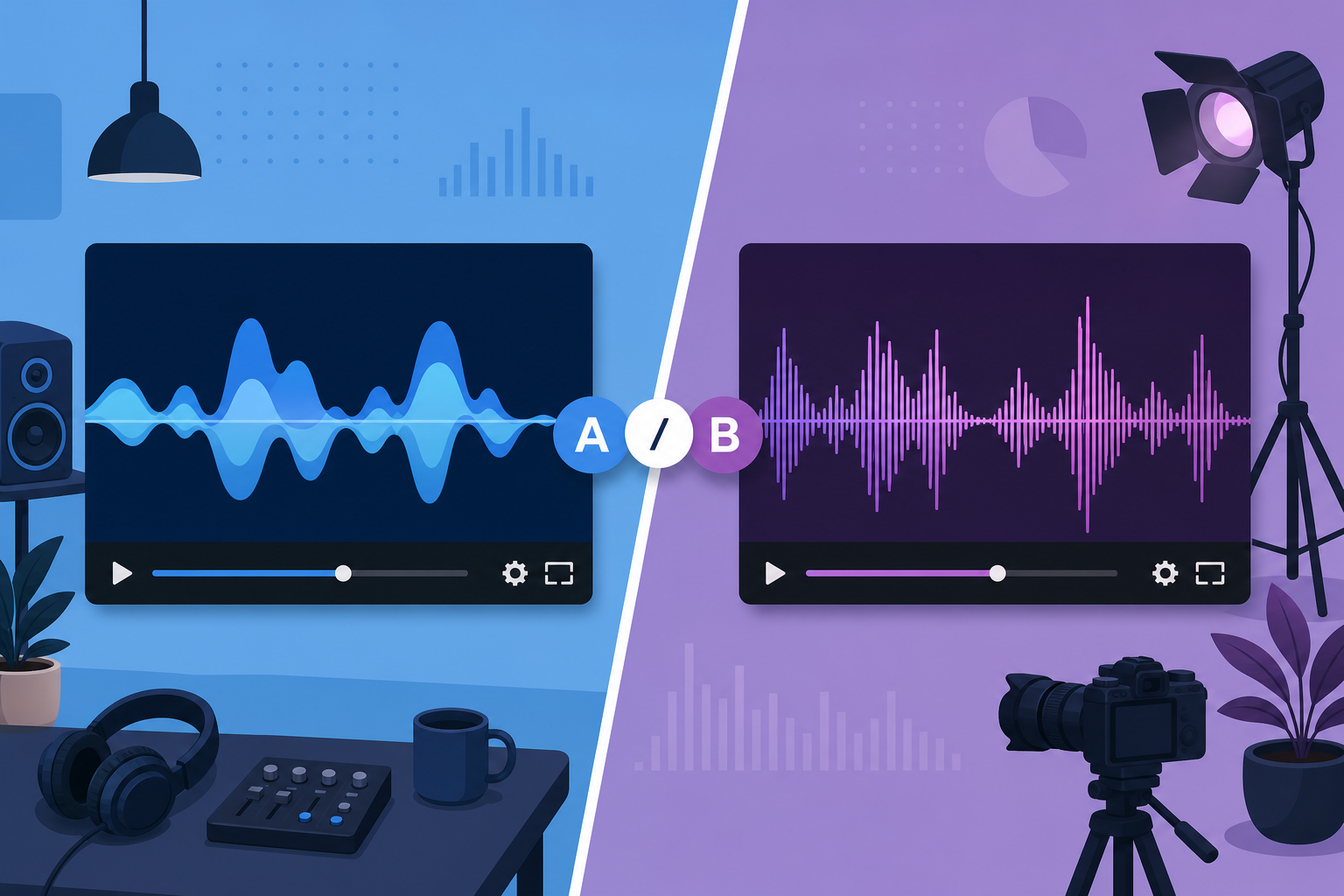
Film one generic hook visual (face, product, text card). Cut three 15-second variants with different tracks from your cleared library. Same visual, same caption structure, different music only. Post staggered 24 hours apart or split across platforms.
Metrics That Matter
Short-form: 3-second hold rate, completion rate, shares. Long-form: average view duration first 30 seconds. Ignore likes alone—they mislead on hook tests. Log results in spreadsheet: track name, BPM, genre, completion %.
Testing on Shorts vs Reels
Shorts skews sound-off initially—visual hook still matters. Reels and TikTok skew sound-on—music leads. Test on the platform you batch for; cross-post winners after validation.
Locking Music for Batch Day
Winner gets tagged in hook library with test date and metrics. Batch day: pull only proven tracks. New untested music waits for next test cycle—see batch workflow guide.
Never batch ten videos with untested audio—test two, then scale eight.
Hook Testing Workflow
- Shortlist 3 cleared tracks by mood tag
- Cut 15s variants with identical visual
- Post with controlled variables
- Wait 48–72 hours, compare completion
- Log winner, batch with that track family
Hook Testing Mistakes
- Testing music + caption + visual simultaneously
- Judging after 2 hours—sample too small
- Using copyrighted trending audio in tests for brand content
- No logging—repeat failed tracks by accident
- Skipping test on "small" batch days
Key Takeaways
- Test 2–3 music variants on identical 15s clips
- Measure completion and 3-second hold—not likes alone
- Log winners in a hook library with metrics
- Only batch with proven tracks from test cycle
- Test on target platform before cross-posting
| Platform | Test Length | Key Metric | Min Impressions |
|---|---|---|---|
| TikTok | 15s | Completion | 1,000 |
| Reels | 15s | 3s hold | 800 |
| Shorts | 20s | AVD first 30s | 500 views |
| YouTube long | 30s clip | Retention curve | 200 views |
Ready to find your soundtrack? Browse thousands of royalty-free tracks on FreeBeatHub.
Browse Free MusicFrequently Asked Questions
How many music variants should I test?
Two to three max per concept. More variants split data too thin on small channels.
Can I test hooks with unpublished clips?
Post as unlisted YouTube Shorts or low-stakes Stories. You need real platform playback behavior—not just friends' opinions.
How long should a hook test run?
48–72 hours or 1,000 impressions minimum, whichever comes first. Short-form needs less time than long-form.
What if all variants perform poorly?
Test visual hook changes next—music cannot fix a weak opening frame. Swap track genre entirely before re-testing.